What Is Spark Testing and Why It Matters for Cable Safety
A single pinhole in cable insulation can cause a fault once it is submerged. Spark testing finds those hidden defects during production. Here is how it works and why it matters for submersible pump cables.
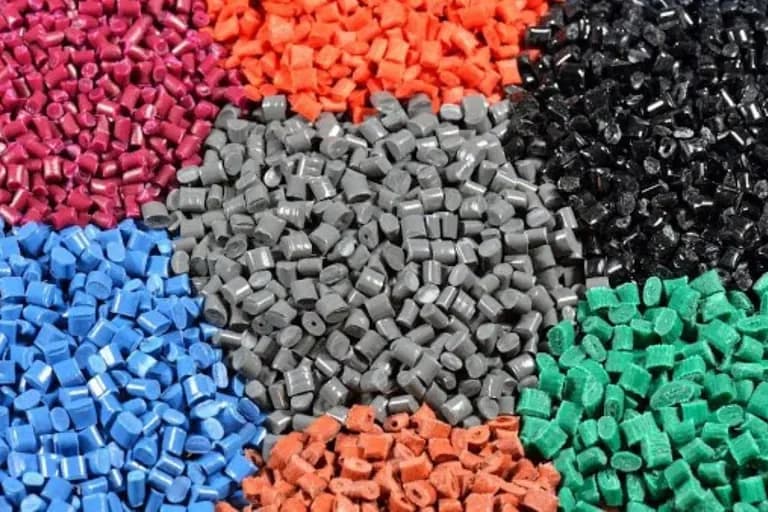
Cable insulation looks simple from the outside: a smooth, even layer of PVC around each conductor. But a defect far too small to see — a pinhole, a bubble or a speck of contamination — can become a path for current once the cable is under water. Spark testing is one of the most important checks manufacturers use to find these hidden flaws before a cable ever reaches a well.
What is spark testing?
Spark testing is an in-line, high-voltage test of cable insulation during manufacturing. As the insulated conductor moves through the production line, it passes through an electrode — often a set of fine metal beads or brushes — that is held at a high test voltage. The conductor inside is earthed.
If the insulation is sound, it withstands the voltage and nothing happens. If there is a pinhole, a very thin spot or a conductive contaminant, the voltage breaks through at that point and a spark jumps to the conductor. The tester detects this instantly and signals a fault.
What spark testing can find
A spark tester is designed to reveal:
- Pinholes — tiny openings through the insulation
- Thin spots — areas where insulation is thinner than it should be
- Microscopic defects — cracks, voids or bubbles within the insulation
- Contamination — foreign particles that weaken the insulating layer
- Bare or exposed conductor — where insulation is missing altogether
These are exactly the kinds of defects that are invisible to the eye but can cause trouble in service.
Why it matters for submersible pump cables
Submersible cables face some of the toughest conditions any cable can: continuous immersion, water pressure at depth, heat during long running hours and mechanical stress during installation. Insulation integrity is therefore critical. Spark testing supports:
- Safety — reducing the risk of leakage current and electric shock hazards.
- Reliability — reducing unexpected tripping and downtime.
- Motor protection — insulation faults in the supply cable can put the motor at risk.
- Lower failure risk — catching defects at the factory is far cheaper than finding them after installation.
How faults are handled
When the tester detects a fault, the location is marked so the defective section can be dealt with before the cable proceeds. Recording faults also helps the production team spot trends — for example, a change in compound or processing that needs attention. In this way spark testing is not just a pass/fail gate; it is feedback that improves consistency.
Spark testing as part of a wider quality process
Spark testing is powerful, but it is one part of a complete quality system. At AL IMRAN CABLE, our quality process covers every stage:
- Raw material selection — choosing suitable copper and PVC compound.
- Conductor manufacturing — drawing and stranding copper consistently.
- Insulation — applying specially formulated PVC with uniform coverage.
- Production testing — including spark testing to detect pinholes and weaknesses.
- Finished cable testing — final checks before dispatch.
Alongside spark testing we focus on uniform insulation for consistent coverage, thermal stability for continuous pump operation, and moisture and water resistance. You can see how these fit together on our quality assurance page.
Why insulation compound matters too
A spark tester can only confirm that the insulation present is continuous and sound. The insulation's long-term performance depends on the compound itself. That is why we use a specially formulated PVC compound designed for heat and moisture resistance. Good compound, applied uniformly, and then verified by spark testing gives the strongest result.
Spark testing vs insulation resistance testing
These two tests are often confused, but they answer different questions:
- Spark testing happens on the production line. It scans every metre of insulation as it is made and pinpoints individual defects such as pinholes or thin spots.
- Insulation resistance testing is usually done on a finished length of cable — and later in the field by electricians — using an insulation tester. It measures how well the insulation as a whole resists current leaking through it.
Think of spark testing as inspecting every brick as a wall is built, and insulation resistance testing as checking the finished wall for leaks. A cable that has passed both gives you confidence in its individual points and its overall condition. In the field, regular insulation resistance readings are your best early warning that a cable is deteriorating, so they complement the factory checks rather than replacing them.
What buyers can do
You cannot spark test cable yourself, but you can make smarter choices:
- Ask your supplier whether their cable is spark tested during production.
- Look for consistent, smooth insulation with no visible blemishes.
- Choose manufacturers who describe their testing process openly.
- Have your electrician measure insulation resistance before commissioning and during maintenance — see our installation and maintenance tips.
Conclusion
Spark testing is a simple idea with a big impact: apply a high voltage to the insulation and let any weakness reveal itself. For submersible pump cables that must work underwater for years, it is an essential safeguard. Combined with high-purity copper conductors — explained in why copper conductors matter — and careful manufacturing, it helps deliver cable you can trust.
Frequently asked questions
What does a spark tester detect?
It detects faults in the insulation such as pinholes, very thin spots, embedded contaminants and other microscopic defects that would let current escape through the insulation.
Does spark testing damage the cable?
When correctly set up, spark testing is a non-destructive check on healthy insulation. It is designed to reveal existing weaknesses so they can be removed.
Is spark testing enough on its own?
No single test covers everything. Spark testing works alongside dimensional checks, visual inspection and finished cable tests as part of a complete quality process.
Why is spark testing especially important for submersible cable?
Submersible cable lives in water. A defect that might go unnoticed in dry conditions can quickly become a leakage path underwater, so catching it at the factory is essential.
- #spark testing
- #insulation
- #quality control
- #cable safety
- #PVC
Related articles
Cable Technology
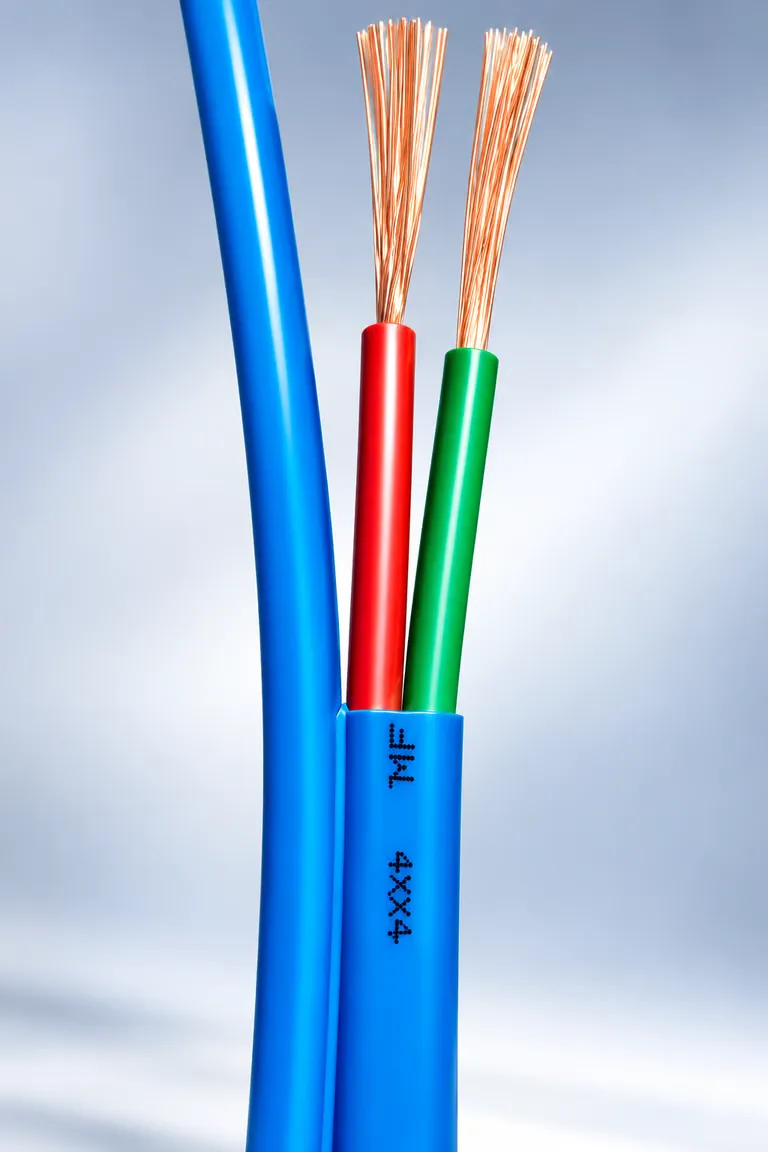
Why Copper Conductors Matter in Submersible Pump Cables
The conductor is the heart of every submersible cable. Here is why high-purity copper delivers better efficiency, flexibility and reliability for pumps that run long hours.
5 min read
Buying Guides
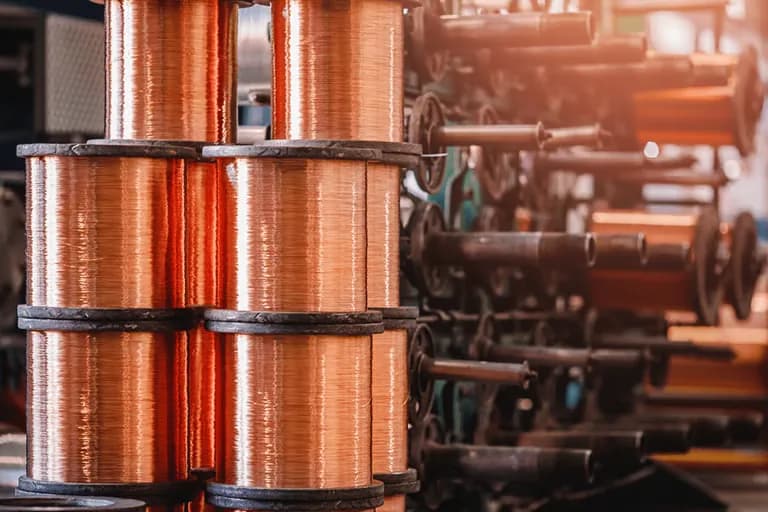
Complete Guide to Submersible Pump Cables
Everything pump owners, installers and dealers need to know about submersible pump cables — how they are built, flat vs round designs, sizing basics, quality checks and how to make them last.
5 min read
Installation & Maintenance
Installation & Maintenance Tips to Extend Submersible Cable Life
Most submersible cable failures start with handling and installation. Follow these practical tips — from unreeling and jointing to insulation checks — to keep your pump cable working for years.
5 min read