
Complete Guide to Submersible Pump Cables
Everything pump owners, installers and dealers need to know about submersible pump cables — how they are built, flat vs round designs, sizing basics, quality checks and how to make them last.
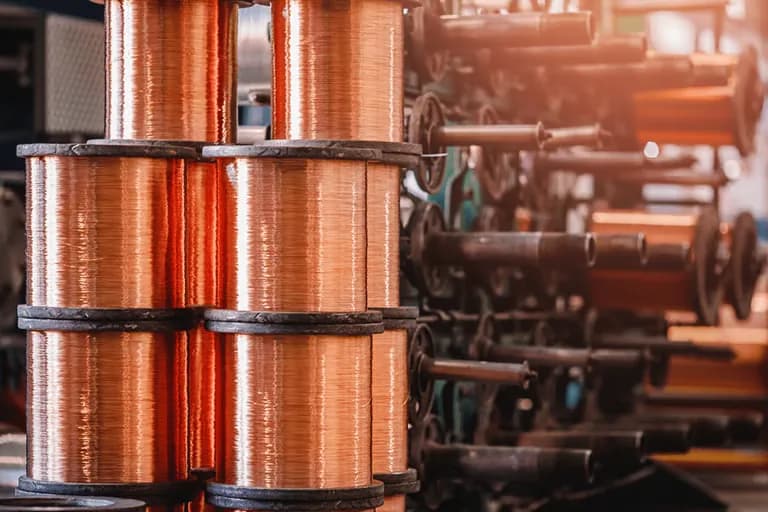
A submersible pump is only as reliable as the cable that feeds it. The cable runs from the control panel at the surface, down the well or borehole, and connects to a motor that may sit tens or even hundreds of metres underwater. It has to carry current efficiently, keep water out for years, and survive the handling of installation and pump removal. This guide explains how submersible pump cables work and what to look for when you buy one.
What is a submersible pump cable?
A submersible pump cable is a flexible power cable built to operate while fully immersed in water. Unlike wiring inside a building, it hangs vertically in a wet, enclosed space, is strapped to a riser pipe, and is expected to work for long, continuous hours — often in the heat of a Pakistani summer when irrigation and water demand peak.
Because of this, three things matter more than anything else:
- Conductivity — so the motor receives the voltage it needs without wasting energy as heat.
- Insulation integrity — so water cannot reach the conductor and cause leakage, tripping or motor damage.
- Mechanical toughness — so the cable survives being lowered, strapped and occasionally pulled back up.
How a submersible cable is built
Most submersible pump cables share the same basic layered construction. Understanding each layer makes it much easier to compare products.
1. The copper conductor
At the centre of each core is a conductor made of many fine strands of copper. Stranding makes the cable flexible enough to coil, reel and bend at the well head. Copper is used because of its excellent electrical conductivity, which keeps losses low. We cover this in depth in why copper conductors matter.
2. Core insulation
Each conductor is covered with insulation — commonly a PVC compound formulated for the job. Good insulation is uniform in thickness, free of pinholes, and resistant to moisture and heat. The cores are usually colour-coded so the electrician can identify phases quickly.
3. The outer sheath
The insulated cores are then held together inside an outer sheath. This protective jacket guards against abrasion against the borehole wall or riser pipe and adds a second barrier against water.
Flat vs round submersible cable
Submersible cables are generally made in two shapes:
- Flat cable — the cores sit side by side. It is slim, sits neatly against the riser pipe, and is a popular choice for narrow boreholes and tube wells.
- Round cable — the cores are bundled in a circular sheath. It offers balanced protection on all sides and seals easily through cable glands.
Both can perform very well when correctly sized and installed. For a detailed comparison, read flat vs round submersible pump cable, or see our flat and round cable pages.
Choosing the right size
Cable size — the cross-sectional area of the conductor — is the single most important selection decision. A cable that is too small for the motor current and cable length will cause voltage drop: the motor receives less voltage than it needs, draws more current, runs hotter and may fail early. Cable that is too small can also overheat.
The main factors are:
- Motor current (full-load amps) from the pump nameplate.
- Supply voltage and whether the supply is single-phase or three-phase.
- Total cable length, from the panel to the motor — not just the well depth.
- Installation conditions, such as ambient temperature and how the cable is laid at the surface.
Our cable size guide walks through the basic voltage-drop calculation. Always have the final choice checked by a qualified electrician.
Quality checks that matter
When comparing suppliers, ask how the cable is tested. Key checks include:
- Spark testing of insulation to find pinholes and weak spots during production. See what is spark testing.
- Uniform insulation thickness, so there are no thin points that fail first.
- Thermal stability, so the insulation holds up during long operating hours.
- Moisture and water resistance, essential for any submerged cable.
- Consistency from raw material to finished product, so every metre performs like the last.
At AL IMRAN CABLE our process runs from raw material selection through conductor manufacturing, insulation, production testing and finished cable testing. You can read more on our quality assurance page.
Where submersible cables are used
Submersible pump cables power pumps in many settings across Pakistan:
- Deep wells and tube wells for agriculture
- Domestic water pumps in homes and housing societies
- Commercial buildings, factories and industrial water supply
- Boreholes serving farms, dairies and communities
Each application has different depths, pump sizes and duty cycles, which is why sizing should always be based on the specific installation. See our applications page for more.
Installation and care
Even the best cable can be damaged by poor installation. A few habits make a big difference:
- Unreel the cable carefully and avoid sharp bends or kinks.
- Strap the cable to the riser pipe at regular intervals without over-tightening.
- Make joints with a proper waterproof splice kit and test them before lowering.
- Protect the cable at the well head from sharp edges and sunlight.
- Measure insulation resistance before commissioning and periodically after.
Our installation and maintenance tips cover these steps in more detail.
Key takeaways
- A submersible pump cable must combine good conductivity, sound insulation and mechanical toughness.
- Flat and round cables both work well; choose the shape that suits your borehole and fittings.
- Size the cable for motor current and total length to avoid voltage drop.
- Ask how the cable is tested — spark testing and consistent insulation are signs of a careful manufacturer.
- Careful installation protects your investment.
Frequently asked questions
What is a submersible pump cable?
It is a power cable designed to run down a well or borehole and connect the surface control panel to a submersible pump motor, operating continuously while immersed in water.
Can I use an ordinary house wire for a submersible pump?
No. Ordinary building wire is not designed for continuous immersion, the mechanical stress of hanging in a well, or the moisture exposure of a borehole. Use cable made for submersible pumps.
Which is better, flat or round submersible cable?
Neither is universally better. Flat cable saves space in narrow boreholes; round cable offers balanced protection and seals easily through glands. Choose based on your installation.
How long does a submersible pump cable last?
Service life depends on cable quality, correct sizing, installation care, water conditions and how the pump is operated. Good installation and correct sizing are the biggest factors you control.
- #submersible pump cable
- #guide
- #deep well
- #tube well
- #copper
- #PVC insulation
Related articles
Buying Guides
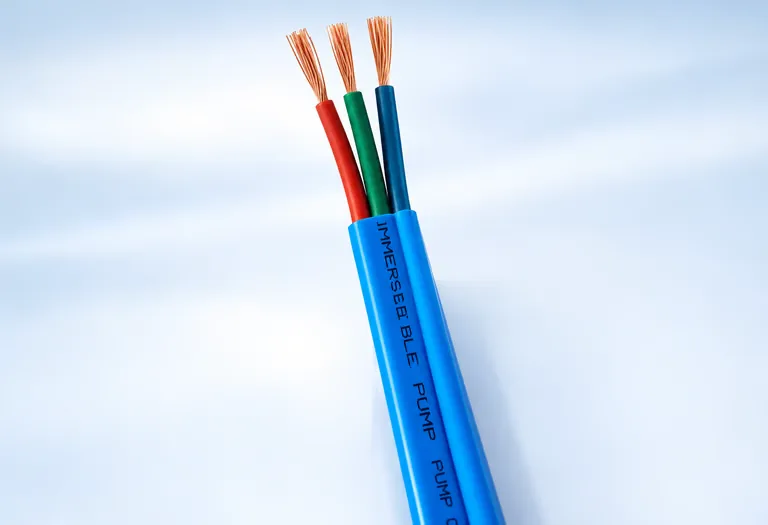
Flat vs Round Submersible Pump Cable: Which One Should You Choose?
Flat and round submersible cables use the same core ingredients but suit different installations. Here is how to decide which shape is right for your well, pump and fittings.
5 min read
Buying Guides
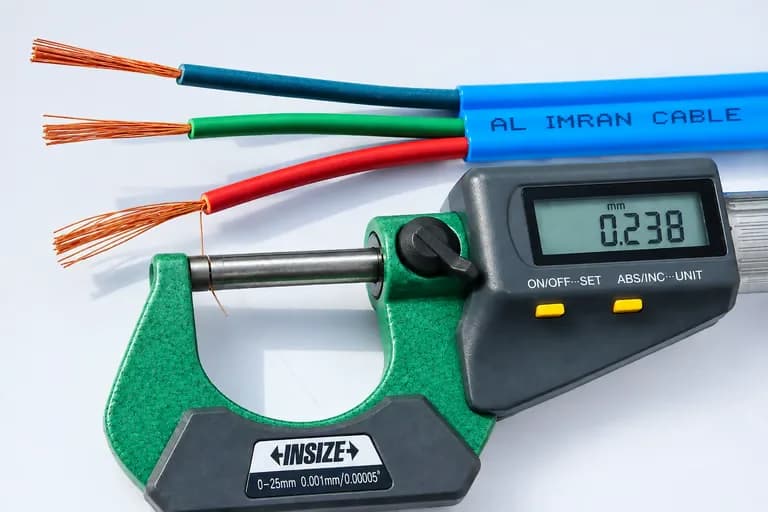
How to Select the Right Submersible Cable Size for Your Pump
Undersized cable is one of the most common causes of burnt pump motors. Learn how motor current, voltage and cable length decide the right submersible cable size — and why you should confirm it with an electrician.
5 min read
Cable Technology
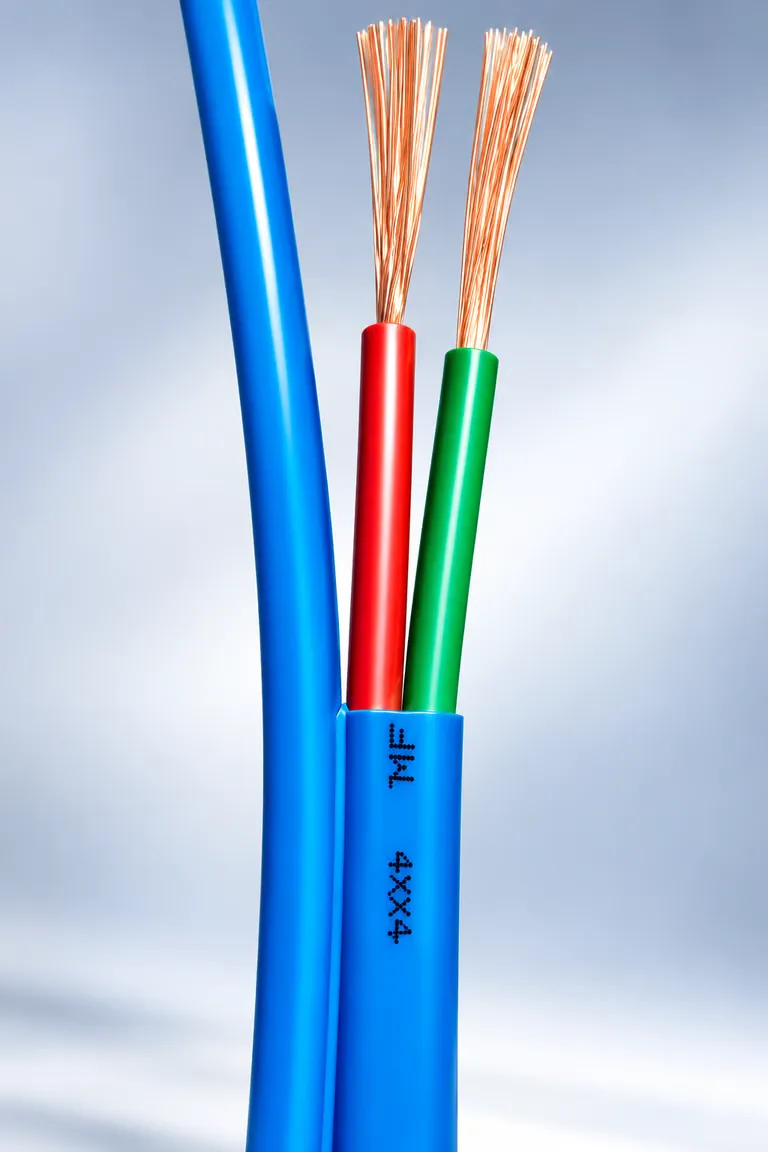
Why Copper Conductors Matter in Submersible Pump Cables
The conductor is the heart of every submersible cable. Here is why high-purity copper delivers better efficiency, flexibility and reliability for pumps that run long hours.
5 min read