
Why Copper Conductors Matter in Submersible Pump Cables
The conductor is the heart of every submersible cable. Here is why high-purity copper delivers better efficiency, flexibility and reliability for pumps that run long hours.
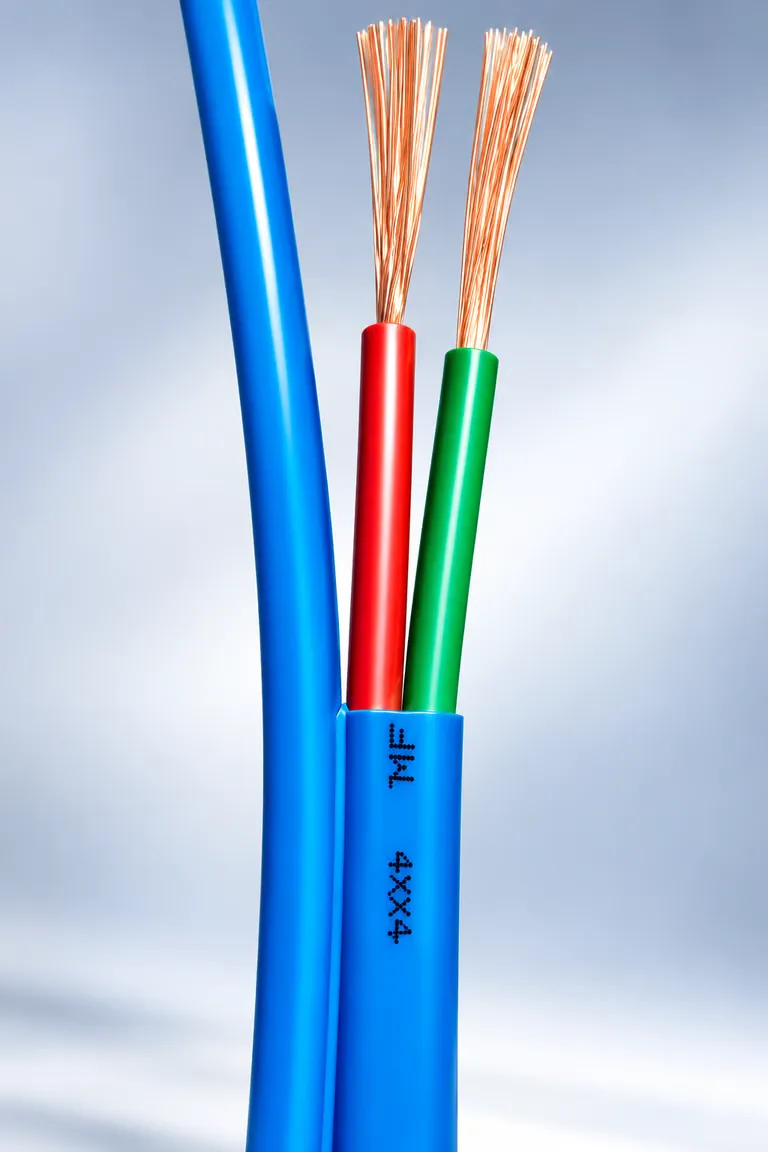
Peel back the sheath and insulation of any submersible pump cable and you reach the part that does the real work: the conductor. Every watt the pump uses travels through it. The quality of that conductor affects how efficiently your pump runs, how hot the cable gets and how long the whole system lasts. For submersible applications, copper is the material of choice — and its purity matters more than many buyers realise.
What the conductor does
The conductor carries current from the control panel to the motor. Ideally it would do so with no loss at all, but every real conductor has some electrical resistance. That resistance converts a small part of the energy into heat and causes voltage drop along the cable.
The goal is simple: keep resistance as low as practical for the conductor size you choose. That is where material and purity come in.
Why copper?
Excellent conductivity
Among commonly used conductor metals, copper offers excellent conductivity. Copper's conductivity is widely used as the reference standard for electrical conductors. Lower resistance means:
- Less energy wasted as heat in the cable
- Less voltage drop, so the motor receives the voltage it was designed for
- Cooler running cable and a more comfortable margin for the insulation
Flexibility and strength
Copper is ductile, so it can be drawn into very fine wires and stranded into flexible conductors. It also tolerates repeated bending well. A submersible cable is reeled, unreeled, strapped to a pipe and sometimes pulled back out for pump servicing, so this mechanical resilience is valuable.
Reliable connections
Copper forms dependable terminations and splices when proper lugs and joint kits are used. At the pump motor joint — one of the most critical points in the installation — that reliability counts.
Why purity matters
Not all copper is equal. Impurities and recycled material of uncertain composition increase resistance. A conductor with lower purity may carry the same size label but behave electrically like a thinner cable.
The consequences are easy to overlook because they are gradual:
- Higher energy bills. Extra resistance wastes a little energy every hour the pump runs. Over months of irrigation, it adds up.
- More voltage drop. The motor may run below its rated voltage, drawing more current and heating up.
- Hotter cable. Extra heat stresses the insulation, particularly in hot climates.
This is why AL IMRAN CABLE uses high-quality, high-purity copper conductors — to support efficient power transmission and better lifetime value.
Stranded vs solid conductors
Submersible pump cables use stranded conductors made of many fine wires rather than a single solid wire. Stranding brings several benefits:
- Flexibility — easier to coil, reel and install.
- Fatigue resistance — fine strands tolerate repeated movement better than a solid core.
- Handling — easier to route at the well head and in the panel.
The quality of the drawing and stranding process affects how uniform the conductor is. Consistent strand diameter and tight, even lay produce a conductor with predictable resistance along its length.
How conductor quality is controlled
A careful manufacturer controls quality at each stage:
- Raw material selection — sourcing copper of suitable purity.
- Wire drawing — reducing copper rod to fine wire with consistent diameter.
- Stranding — twisting wires into a uniform, flexible conductor.
- Inspection — checking dimensions and appearance during production.
- Finished cable testing — confirming the final product performs as intended.
You can read more about how we approach this on our quality assurance page.
Copper and energy efficiency
Pumps in agriculture and water supply often run for many hours a day. Even small improvements in efficiency are multiplied over thousands of operating hours. A cable with a good copper conductor, correctly sized for the run, helps minimise electrical losses — one of the reasons we describe our cables as built for energy efficiency and long-term savings.
To understand how conductor size interacts with length and current, read our guide to selecting submersible cable size.
Copper vs aluminium conductors
Aluminium is sometimes used in overhead lines and large power cables because it is lighter and cheaper. For submersible pump cables, however, copper is the usual choice, for several practical reasons:
- Lower resistance for the same size. Aluminium's conductivity is roughly 61% of copper's, so an aluminium conductor must be noticeably larger to carry the same current with the same losses — which makes the cable bulkier in a narrow borehole.
- Better flexibility and fatigue life. Fine copper strands tolerate repeated bending and handling better, which matters every time the pump is lowered or pulled.
- More forgiving joints. Copper terminations and splices are generally simpler and more reliable, while aluminium needs special care to avoid oxidation and loosening at connections.
For a cable that hangs in water and must be jointed to a pump motor lead, these advantages add up to a more dependable installation.
What to look for as a buyer
- Buy from a manufacturer who can explain its conductor and quality process.
- Look for bright, uniformly stranded copper when you inspect a cut end.
- Be cautious of prices that seem too good to be true for a given size.
- Match the size to your pump's current and cable length.
- Ask whether the finished cable is tested before dispatch.
Conclusion
The conductor is the heart of your submersible cable. High-purity copper delivers the conductivity, flexibility and reliability that submersible pumps demand, and it pays back through efficient operation. Explore our flat submersible pump cable and round submersible pump cable, both built on high-quality copper conductors.
Frequently asked questions
Why is copper preferred for submersible pump cables?
Copper has excellent electrical conductivity, good flexibility when stranded and resists fatigue from repeated bending, which suits cables that are coiled, lowered and occasionally pulled from wells.
What does high-purity copper mean?
It refers to copper with very low levels of impurities. Impurities increase electrical resistance, so higher purity generally means better conductivity and lower losses.
Why are the conductors stranded instead of solid?
Many fine strands make the cable flexible and less prone to breaking when bent, reeled or handled during installation.
How can I tell if a cable has good copper?
Buy from a manufacturer who controls raw material selection and tests the finished cable. Bright, uniform strands are a visual sign, but resistance testing is the reliable check.
- #copper conductor
- #conductivity
- #energy efficiency
- #stranded conductor
Related articles
Buying Guides
Complete Guide to Submersible Pump Cables
Everything pump owners, installers and dealers need to know about submersible pump cables — how they are built, flat vs round designs, sizing basics, quality checks and how to make them last.
5 min read
Buying Guides
How to Select the Right Submersible Cable Size for Your Pump
Undersized cable is one of the most common causes of burnt pump motors. Learn how motor current, voltage and cable length decide the right submersible cable size — and why you should confirm it with an electrician.
5 min read
Cable Technology
What Is Spark Testing and Why It Matters for Cable Safety
A single pinhole in cable insulation can cause a fault once it is submerged. Spark testing finds those hidden defects during production. Here is how it works and why it matters for submersible pump cables.
5 min read